
Enterprise Calendar Planning Across Teams
Estimated reading time: 5 minutes
Understanding how plans interact over time
A Calendar Planner usecase: Large organisations don’t lack plans. They lack visibility. In most large organisations, planning information already lives in SharePoint. Initiatives, milestones, delivery windows, maintenance periods, and regulatory dates are tracked in lists that teams already own and maintain. The challenge is not creating plans, it’s seeing them together. Senior leaders ask for a view of the year. Teams respond with spreadsheets, slides, or manually assembled timelines that are out of date almost immediately. As soon as reality changes, the view becomes unreliable.
How Calendar Planner Fits
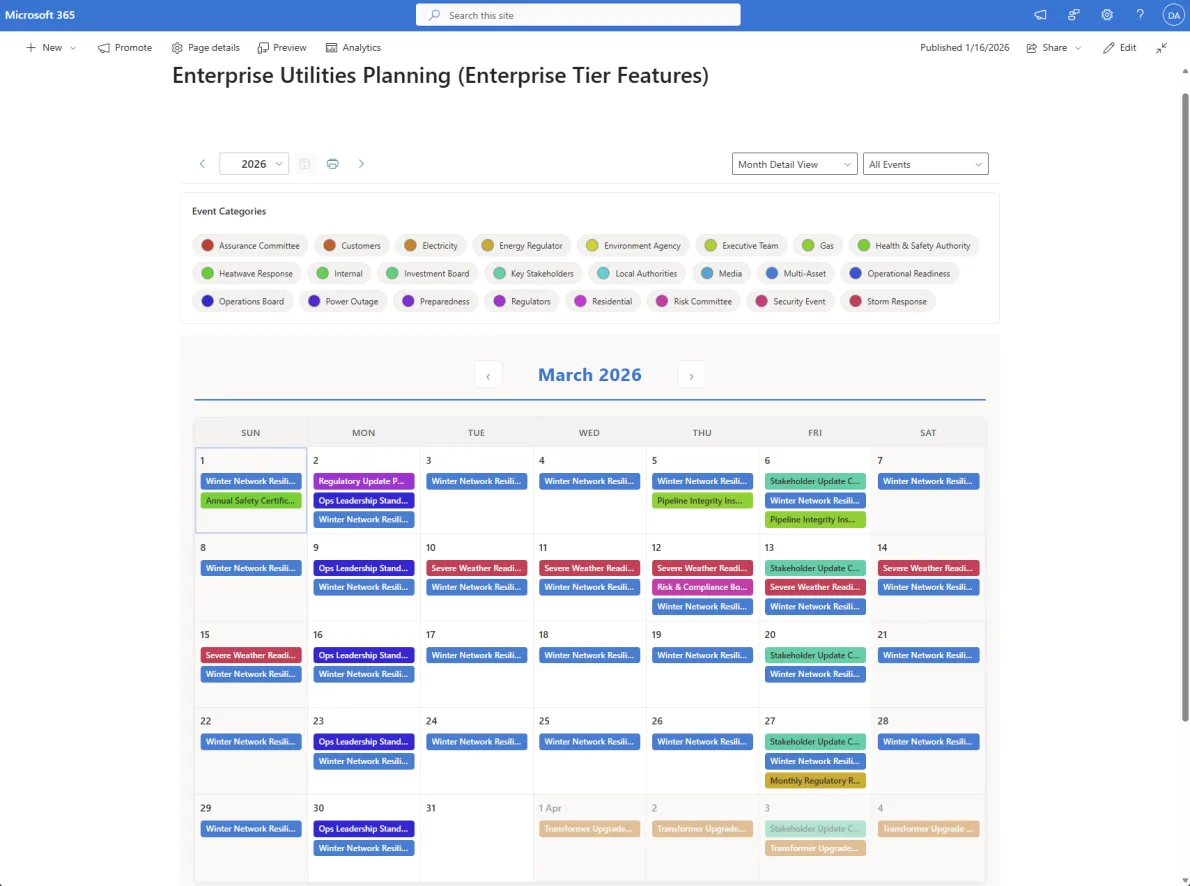
Calendar Planner does not replace existing planning processes or introduce a new system. It simply visualises existing SharePoint list data across time. By reading dates that teams already maintain, Calendar Planner presents a clear, visual view of activity across the year. As lists are updated, the view updates automatically. There is no duplication, no synchronisation, and no additional system to keep in step with reality. Different calendar and timeline views allow the same data to be viewed at different levels, from a high-level annual overview to detailed timelines, without changing how teams work.
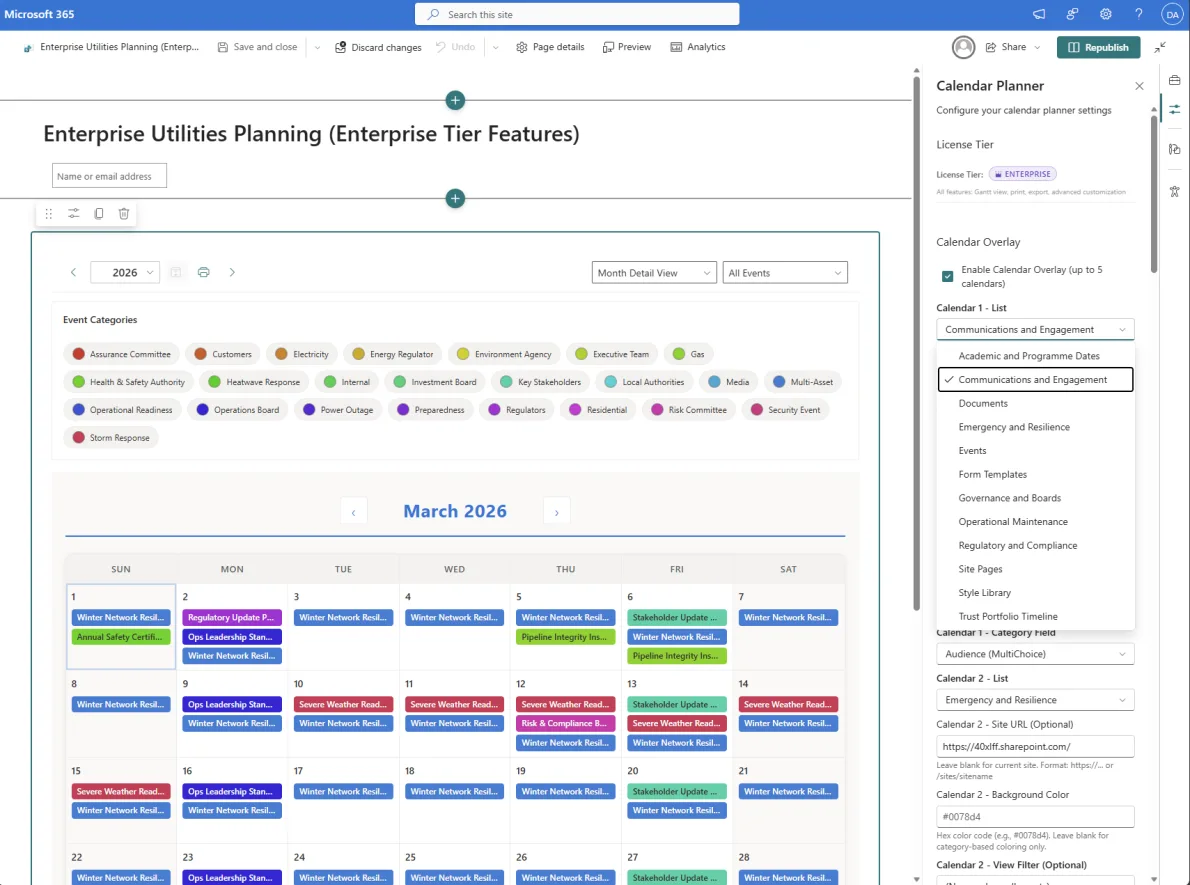
In larger organisations, this often means visualising multiple SharePoint lists together: operational plans, regulatory schedules, governance cycles, and communications activity, without consolidating or restructuring them. Calendar Planner overlays these timelines into a single planning surface, while ownership and governance remain exactly where they are today.
Why This Feels Low Risk
- Data stays in SharePoint lists you already govern
- No parallel planning system is introduced
- No new process ownership is required
- Removing Calendar Planner leaves all data unchanged
- Calendar Planner adds visibility, not dependency
What This Enables
- A reliable, always-current view of the year
- Less manual reporting and rework
- Fewer alignment meetings
- Planning views that stay accurate as reality changes
This approach works particularly well for large enterprises, utilities, infrastructure providers, and public-sector organisations that already rely on SharePoint as a system of record.
Large organisations scenario (Enterprise Edition)
A large utilities organisation needs visibility across operational, regulatory and governance plans, without consolidating them into a new planning system.
Understanding how plans interact over time
In large organisations, planning information already exists across many teams. Maintenance schedules, regulatory deadlines, governance cycles and communications activity are all tracked, but they are rarely seen together.
The challenge is not a lack of planning, but a lack of visibility into how different plans overlap and interact across time.
With the Enterprise Calendar Planner tier, organisations can visualise multiple SharePoint based schedules together in a single view. This makes overlaps, sequencing issues and pressure points easier to see, while leaving ownership and governance of each plan exactly where it is today.
This approach supports coordination and oversight without introducing a parallel planning system or changing how teams already work.
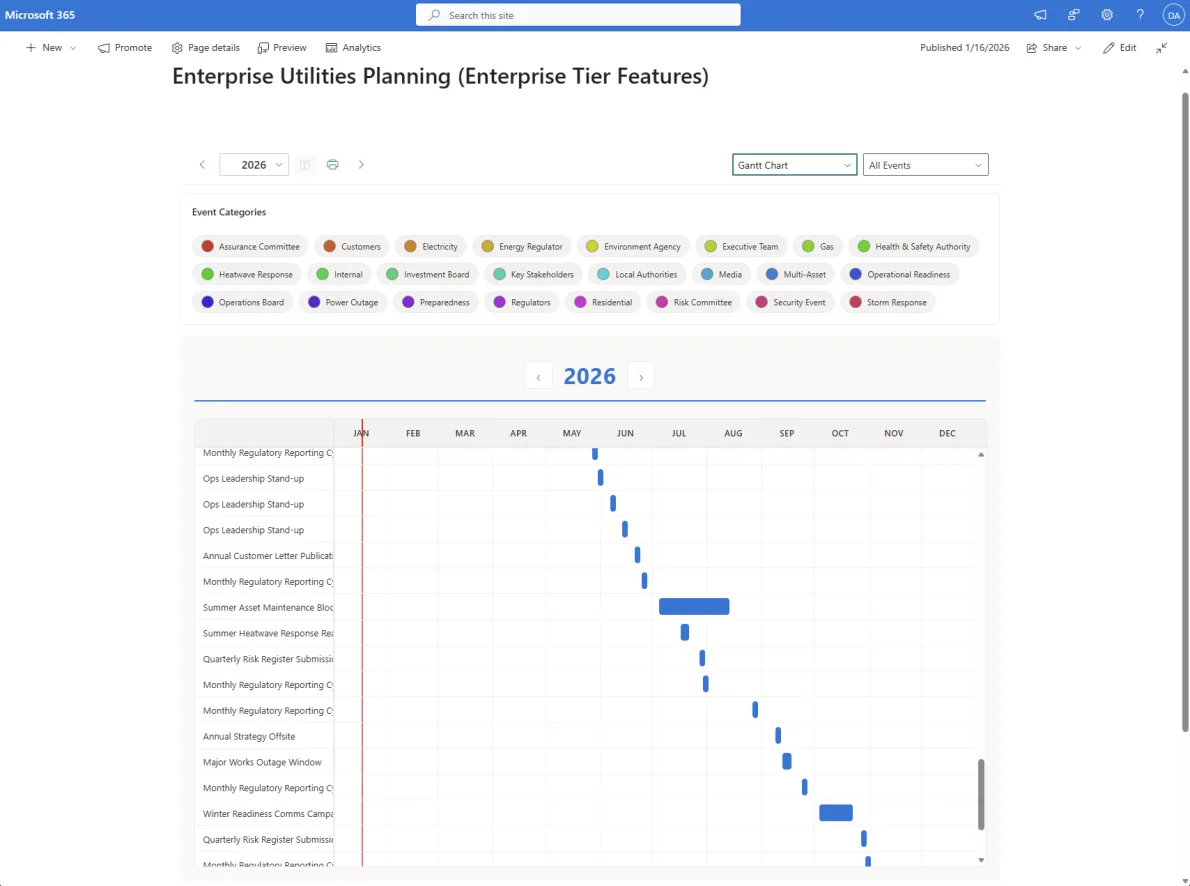
Gantt chart view
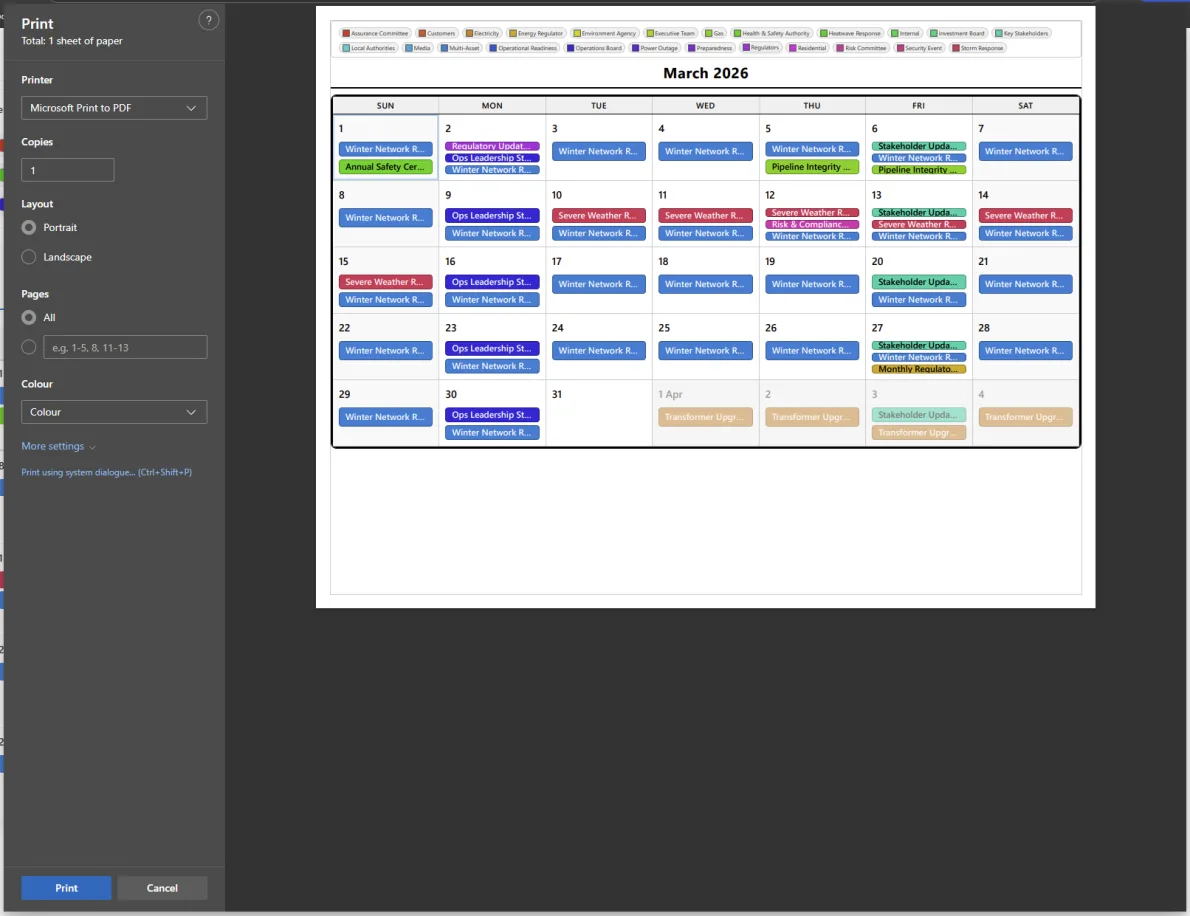
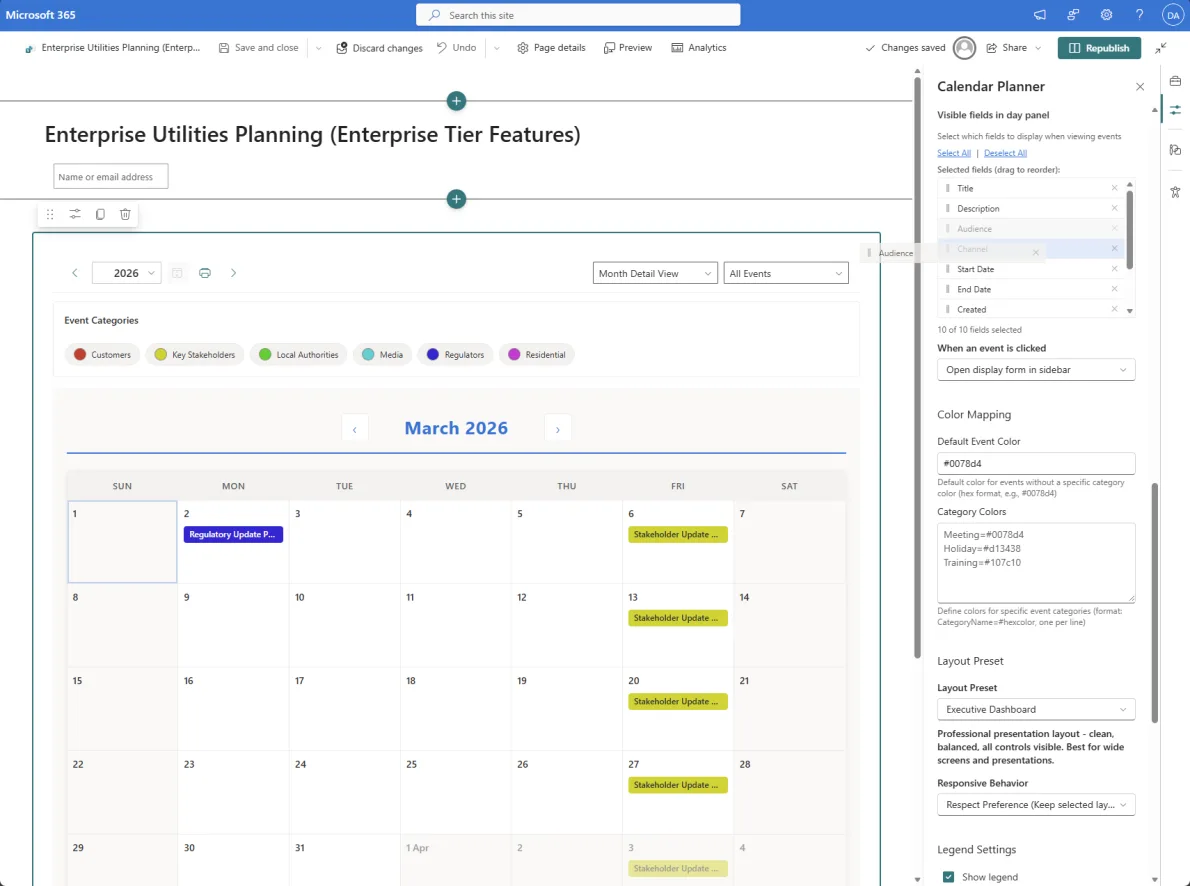
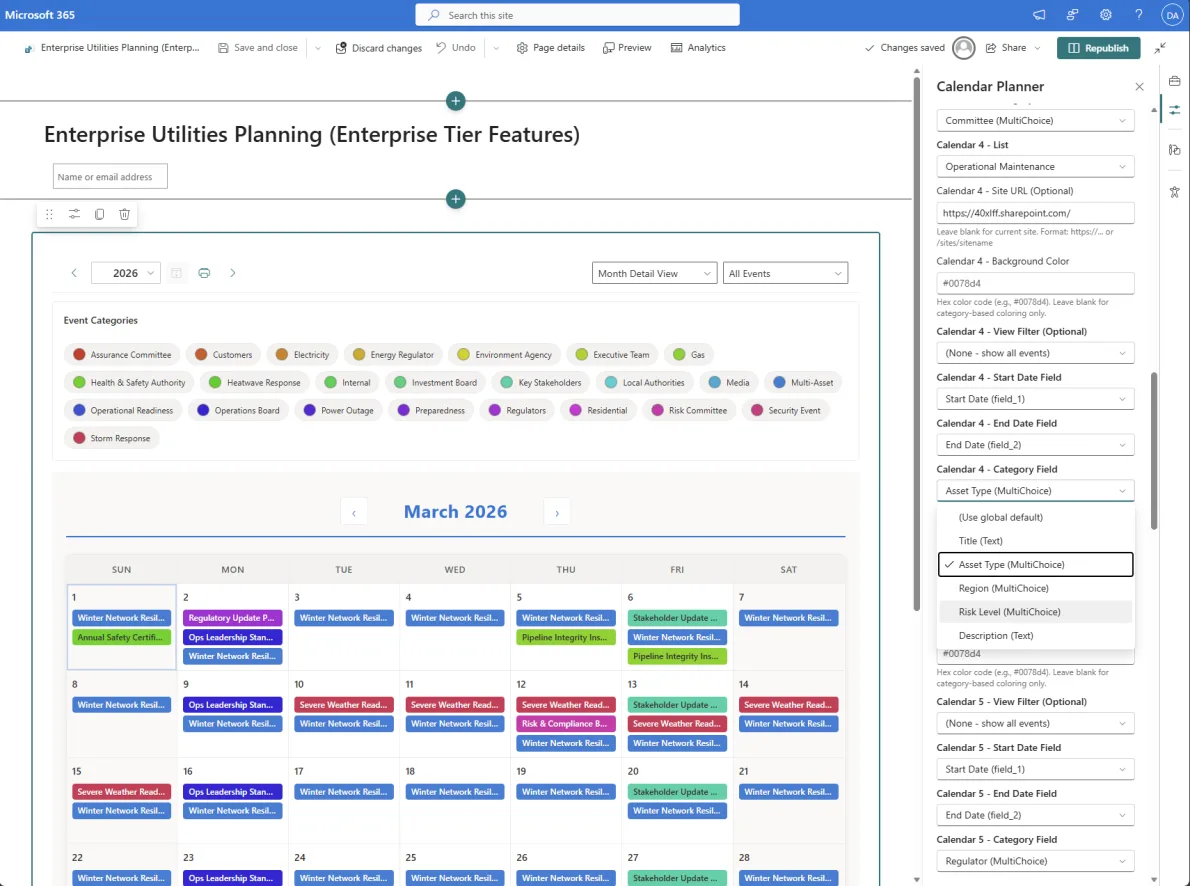
Calendar Planner does not try to replace how organisations plan. It quietly improves how existing planning information is seen. There is no new system to manage, no data migration, and no lock-in. If it’s removed, nothing breaks. That’s why it fits naturally into organisations that value stability, governance, and gradual improvement.
To learn more about what Calendar Planner can do, go to its product page or download it now using the button below
‘Calendar Planner’ for SharePoint
Enterprise Edition
£5.31Everything in Standard, plus these advanced capabilities
If you liked this insight, perhaps consider signing up for our monthly newsletter to receive more exclusive subscriber content:
‘JFDI Brief’
Sign up for the latest news, insights and whitepapers on how to modernise, migrate and build faster…
Latest news See all
The future of Locodium
Locodium is our software development platform, constantly evolving, gaining new features and capabilities with each released version. Supporting the advancement of full-scale business applications with an emphasis on long-term sustainability. Encouraging developers to think about systems as living structures, considering data, engagement rules, workflow, and an interface that evolves together. That philosophy continues to guide […]
How JAF became Locodium
Before our first development framework existed, JFDI was building complex, long-lived business systems. Solutions for clients who needed more than quick wins or throwaway applications. Over time, we observed more and more patterns. Not theoretical, but practical ones shaped by maintenance, change, scale, and the benefit of getting early decisions correct.
The JFDI Agentic Development Manifesto
The promise of AI-assisted development is being squandered. Every day, developers paste enterprise code into generic AI tools and receive plausible-looking output that fails on contact with reality. Hallucinated APIs. Invented functions. Patterns that existed in training data but not in production. The industry has accepted a 50% rework rate as normal – and called it “productivity gain.”